
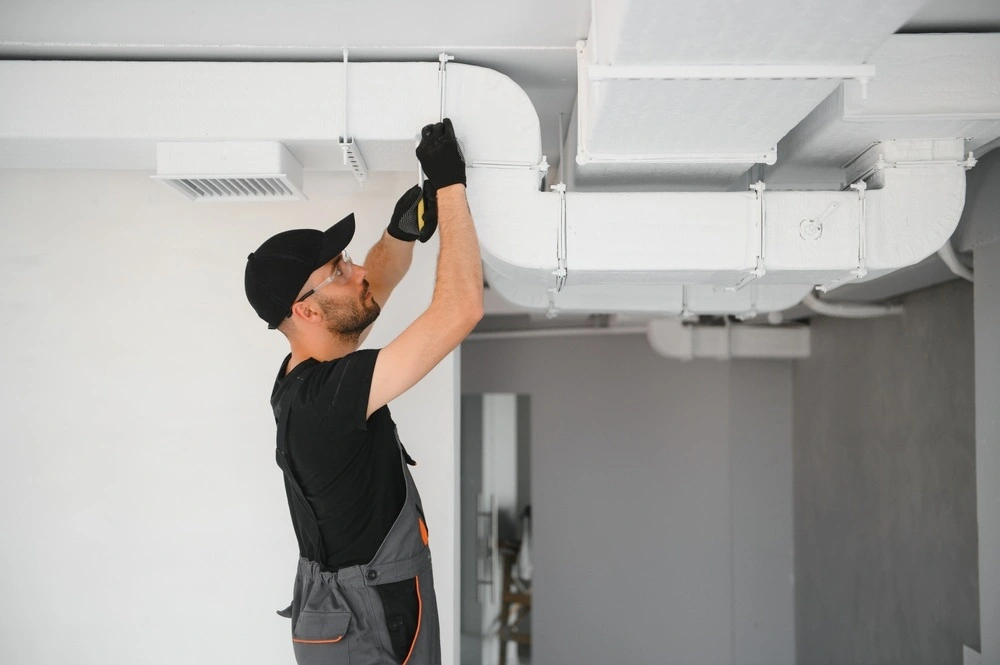
Energy loss from leaky ducts can waste up to 30% of the air moving through your home, which means you are paying to heat and cool air that never reaches your rooms. Leaky ducts force your system to run longer, drive up your bills, and leave some rooms uncomfortable. The good news is that sealing them is one of the highest-return fixes in your home. This guide shows you how to spot duct leaks, why they happen, and how to stop the waste.
Key Points
- Leaky ducts waste 20 to 30% of the air your system heats or cools, sometimes more.
- Uneven room temperatures, rising bills, and excess dust are the clearest warning signs.
- DIY sealing works for accessible ducts using mastic and metal tape, never cloth duct tape.
- Professional duct sealing costs about $500 to $1,500 and often pays back in 1 to 3 years.
- Sealing improves comfort, lowers bills, and extends the life of your HVAC system.
What Is Energy Loss From Leaky Ducts?
Ducts are the tubes that carry heated or cooled air from your HVAC system to every room. When they develop holes, cracks, or loose connections, that conditioned air escapes into your attic, crawl space, or walls before it reaches you. The result is living spaces that never get all the air they should and a system that works overtime to keep up.
Why Do Ducts Leak in the First Place?
Ducts develop leaks for several reasons:
- Age and natural wear and tear
- Poor installation or cheap materials
- Disconnected sections from house settling
- Damage from pests or home renovations
- Improper sealing when first installed
Most homes lose 20 to 30% of their conditioned air through leaky ducts, according to ENERGY STAR. That is like throwing away $20 to $30 of every $100 you spend on heating and cooling, and it is worst when ducts run through unconditioned spaces like attics and crawl spaces.
How Do Leaky Ducts Affect Comfort?
Beyond wasting money, energy loss from leaky ducts creates comfort problems. Some rooms feel too hot or too cold, your home takes longer to reach the temperature you set, more dust and allergens enter through leaky return ducts, and humidity is harder to control. Because the system runs longer to make up for lost air, that extra strain shortens equipment life and raises the odds of a breakdown.
What Are the Signs Your Home Has Leaky Ducts?
Temperature Inconsistencies
The most obvious sign is uneven temperatures throughout your home. If some rooms feel like a freezer while others feel like a sauna, leaky ducts may be the reason, especially in rooms far from your HVAC unit. You may also notice your home takes a long time to reach the thermostat setting.
High Energy Bills
If your bills climb without a change in how you use energy, leaky ducts are a likely cause. Compare your current bill to the same month last year. Many homeowners do not realize they are losing money until they seal their ducts and watch bills drop by 20% or more.
Excessive Dust
If you dust more than seems normal, your ducts may be leaking. Leaky return ducts pull dust from attics, crawl spaces, and walls, then spread it through your home, which affects both your cleaning and your air quality.
Visual Inspection Clues
Sometimes you can spot the signs yourself:
- Disconnected or kinked duct sections
- Visible holes or tears in flexible ducts
- Dust streaks near duct connections
- Insulation that looks disturbed around ducts
- Ducts that are crushed or restricted
Check any exposed ductwork in your attic, basement, crawl space, or garage with a flashlight.
How Much Money Are Leaky Ducts Costing You?
The 30% Rule
The typical home loses 20 to 30% of the air moving through its duct system to leaks and poor connections, according to the U.S. Department of Energy. If your monthly heating and cooling costs are $200, you could be wasting $40 to $60 every month, or $480 to $720 a year. It is like driving a car with a hole in the gas tank.
The Hidden Costs
Beyond the direct waste, leaky ducts create other expenses: shortened equipment life from overworking, more frequent repairs from system strain, space heaters or fans for uncomfortable rooms, and possible health costs from poor air quality.
What Is the Return on Investment?
Fixing leaky ducts usually pays for itself quickly. Professional duct sealing typically costs $500 to $1,500 depending on your home’s size and duct access. With savings of $500 or more per year, many homeowners recoup the cost in 1 to 3 years. DIY sealing of accessible ducts can pay back even faster.
How Do I Seal Duct Leaks Myself?
Materials You Will Need
- Mastic sealant, a paste made for ducts
- Metal tape, not cloth duct tape, which fails quickly
- Brush for applying mastic
- Gloves and safety glasses
- Flashlight
- Small mirror on an extendable handle to see behind ducts
You can find these at most hardware stores for under $50 total.
Step-by-Step Sealing Process
- Turn off your HVAC system before starting.
- Inspect all accessible ducts in your attic, basement, crawl space, and garage for disconnected joints, holes, and loose connections.
- Clean around leaks with a damp cloth so the sealant sticks.
- For small gaps and seams, wrap metal tape all the way around the joint.
- For larger gaps or joints, brush on a thick layer of mastic sealant.
- Pay special attention to where ducts connect to vents, registers, and the HVAC unit.
- Let the sealant dry completely before turning the system back on.
Focus on ducts in unconditioned spaces first, since those leaks waste the most.
What Not to Do
- Do not use cloth duct tape, which dries out and fails fast
- Do not try to seal ducts you cannot reach safely
- Do not skip safety precautions in attics or crawl spaces
- Do not seal vents or intentional openings
When Should You Call a Professional?
DIY works for accessible ducts, but some situations call for a pro. Consider professional help if most of your ductwork is hidden in walls or ceilings, you have sealed the visible ducts but still see symptoms, your bills stay high, certain rooms stay uncomfortable, or you are not comfortable working in tight spaces. A pro performs a duct leakage test, uses cameras or smoke tests to find hidden leaks, seals from the inside out with aerosol sealants, repairs damaged sections, insulates ducts in unconditioned spaces, and runs a follow-up test. Professional sealing can cut leakage by up to 90%, and our HVAC maintenance team can handle the whole job.
How Do I Choose the Right Professional?
Look for a contractor certified by NATE, ask whether they perform before-and-after leakage testing, request references from past duct sealing jobs, and compare a few estimates. A good professional explains exactly how they will address the leaks and gives a clear estimate of the expected savings.
How Do I Prevent Future Duct Leaks?
Regular Maintenance Checks
Inspect visible ductwork each year, schedule professional HVAC maintenance that includes a duct inspection, replace air filters monthly since clogged filters raise duct pressure, and listen for new whistling sounds that hint at fresh leaks. Catching small leaks early keeps them from becoming big ones.
Upgrading Your Duct System
If your ductwork is old or poorly designed, a few upgrades help for good: replace flexible ducts with rigid metal, add insulation in unconditioned spaces, install a zoned system with dampers, or add a ductless mini-split for problem rooms. When ductwork is beyond sealing, our HVAC installation and replacement team can design a system that fits your home.
Long-Term Benefits of Proper Duct Maintenance
Sealed, well-maintained ducts deliver lower bills month after month, more consistent comfort, longer equipment life, better indoor air quality, and a smaller carbon footprint.
Frequently Asked Questions About Energy Loss From Leaky Ducts
How much energy do leaky ducts waste?
Leaky ducts typically waste 20 to 30% of the heated or cooled air passing through them, which adds up to hundreds of dollars a year for the average homeowner. In severe cases with badly damaged ductwork, the waste can reach 40% or more of your system’s output.
How long does duct sealing last?
Professional sealing with mastic or aerosol sealant typically lasts 10 to 20 years. Metal tape applied to clean ducts lasts 5 to 10 years. Cloth duct tape usually fails within 1 to 2 years, which is why it is not used for lasting duct repairs.
Will sealing my ducts make my home more comfortable?
Yes. Sealing helps conditioned air reach its destination, so most homeowners notice more even temperatures, faster heating and cooling, and better humidity control. Rooms that used to run too hot or too cold often become comfortable.
Can leaky ducts affect my health?
Yes. Leaky return ducts can pull in dust, insulation particles, mold spores, and pest droppings from attics, crawl spaces, and walls, then circulate them through your home. That can trigger allergies or respiratory issues.
Is duct sealing covered by energy rebates?
Many utilities and government programs offer rebates or incentives for duct sealing because it is one of the most cost-effective energy improvements a homeowner can make. Check with your local utility to see what is available in your area.
Stop Wasting Energy on Leaky Ducts Today
Energy loss from leaky ducts quietly costs you money and comfort every day. Whether you seal accessible ducts yourself or bring in a pro for a full solution, fixing duct leakage is one of the smartest energy investments you can make, and the savings keep paying off for years. Backed by a 4.8 star rating and more than 1,400 five star reviews from your neighbors, our team delivers solutions, not excuses. Schedule your appointment today for a duct inspection and sealing service, and start saving.