

Gas Leak Repair in Vacaville, CA
We Offer Solutions, Not Excuses
- Community Trusted
- Above and Beyond Service
- Women Owned
Contact Us
A gas leak is one of the most serious situations a homeowner can face. Natural gas is odorless in its natural state — the sulfur smell most people associate with gas leaks is a safety additive called mercaptan, added specifically so leaks can be detected. When that smell is present, or when other indicators point toward a possible leak, the response needs to be immediate.
Advanced Plumbing, Heating and Air provides professional gas leak detection and repair for Vacaville homeowners. We locate leaks accurately using calibrated detection equipment, repair the source completely, pressure test the system before gas is restored, and verify zero leakage before we leave the job. Safety is not a step in this process — it is the entire framework around which every other step is organized.
Our Services
- AC Capacitor Replacement
- AC Coil Cleaning
- AC Installation & Replacement
- AC Maintenance
- AC Repair
- AC Tune Up
- Attic Fan Installation
- Emergency HVAC Repair
- Furnace Installation & Replacement
- Furnace Maintenance
- Furnace Repair
- Gas Leak Repair
- Heat Pump Installation & Replacement
- Heat Pump Maintenance
- Heat Pump Repair
- HVAC Installation & Replacement
- HVAC Inspection
- HVAC Maintenance
- HVAC Repair
- HVAC UV Light Installation
What Your Neighbors Are Saying About Us

Warning Signs of a Gas Leak
Recognizing the signs of a gas leak gives you the opportunity to act before a situation becomes a catastrophe. Some signs are immediate and obvious. Others are subtle and develop gradually.
Immediate warning signs — treat as urgent:
- Sulfur or rotten egg odor anywhere inside the home, garage, or near gas appliances and meters
- Hissing, whistling, or blowing sounds near a gas line, appliance connection, or meter
- Visible damage to a gas line from excavation, construction, or physical impact
- A gas appliance flame that has turned orange or yellow instead of burning blue
- Gas appliance that won’t stay lit or pilot light that keeps going out
Gradual or subtle warning signs:
- Dead, yellowing, or stunted vegetation in a defined area of the yard above a buried gas line when surrounding plants are healthy
- Unexplained bubbling in puddles, wet ground, or standing water near the foundation or in the yard
- Persistent dizziness, headaches, nausea, or lightheadedness that improve when you leave the home
- Higher than expected gas bills without a change in usage or seasonal explanation
- Unusual condensation on windows or walls near gas appliances
- Pets behaving unusually — disoriented, lethargic, or avoiding areas of the home they normally use
Any combination of these signs warrants immediate action. Do not wait to see if the smell fades or the symptoms resolve on their own.
What to Do If You Suspect a Gas Leak
The actions you take in the first minutes of a suspected gas leak matter significantly. The wrong actions — operating a light switch, using a phone inside the home, or attempting to locate the source yourself — can turn a leak into an ignition event.
Follow these steps immediately:
- Stop what you’re doing and leave the home right away — do not stop to gather belongings, turn off appliances, or investigate the source
- Do not operate any electrical switches, light switches, ceiling fans, garage door openers, or any other electrical device on your way out
- Do not use any open flames — candles, lighters, or matches
- Leave doors open as you exit to allow ventilation
- Do not use your cell phone until you are outside and a safe distance from the building
- Once outside, call PG&E’s gas emergency line: 1-800-743-5000
- Do not re-enter the home for any reason until PG&E has responded, assessed the situation, and confirmed it is safe
- After the gas utility has responded and the immediate emergency is addressed, call Advanced Plumbing, Heating and Air to locate and repair the source of the leak before gas service is restored
If a neighbor’s property is nearby and could be affected, alert them to move away from the area as well.
What not to do:
- Do not attempt to find the leak yourself by using a flame to test connections
- Do not turn the gas supply on or off yourself unless you have been specifically instructed to do so by the gas utility
- Do not assume the smell will pass and the situation is resolved
- Do not re-enter the home to retrieve items — no belongings are worth the risk
Our Gas Leak Detection and Repair Services
Once PG&E has addressed the immediate safety situation and the property is cleared for reentry, Advanced Plumbing, Heating and Air provides the professional gas leak repair service needed before gas service can be safely restored.
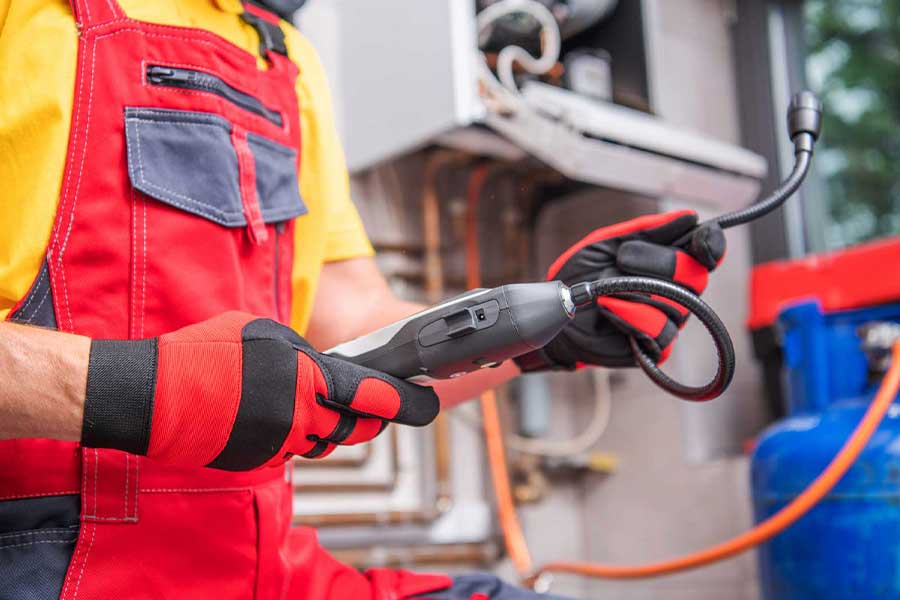
Electronic leak detection is the starting point for every gas leak service call. We use calibrated electronic gas detection equipment that identifies natural gas concentrations far below what the human nose can detect. This allows us to locate the precise source of a leak — including secondary leak points that may not produce a detectable odor at normal concentrations — before any repair work begins. We don’t repair by assumption. We locate first, confirm the source, and repair with complete information.
Full gas line inspection is performed on every gas leak service call to identify not just the confirmed leak point but the overall condition of the gas line system. A leak at one fitting is often an indicator that other fittings or connectors in the same system are at a similar stage of deterioration. Identifying all conditions during the initial visit is what prevents a follow-up call for a new leak at a different location within weeks of the first repair.
Source repair addresses the specific location of confirmed leaks with code-compliant materials and installation methods appropriate for the type and location of the problem — fitting replacement, flexible connector replacement, pipe section repair, valve replacement, or other repair as the specific situation requires.
Pressure testing is performed after every repair before gas service is restored. The repaired section is pressurized to the required test pressure and held for the required duration to confirm the repair holds and no additional leak points are present. Pressure testing is not optional — it is the confirmation that the repair is complete and the system is safe.
Final leak verification is performed after pressure testing passes and gas is restored. We use detection equipment and approved leak detection solution at every connection point in the repaired section to confirm zero leakage before we consider the job complete.
Appliance restoration and testing confirms that gas appliances are relighting correctly and operating normally after service is restored.
Safety Protocols We Follow on Every Call
Gas leak repair requires a disciplined safety approach on every job regardless of the apparent severity of the situation when we arrive. Advanced Plumbing, Heating and Air follows a consistent set of protocols on every gas leak service call.
Licensed technicians only. Gas line work in California requires a licensed contractor. Every technician we send to a gas leak call holds the appropriate California contractor licensing for gas line repair. This is a legal requirement and a baseline safety standard.
Calibrated detection equipment on every call. Electronic gas detectors are brought to and used on every gas service call — not just when a leak is suspected. Detection equipment identifies gas concentrations that human senses miss and confirms the absence of gas after repair.
Gas service isolation before repair. The affected gas line section or the full supply is isolated before any repair work is performed. No repair work proceeds with active gas flow in the line being worked on.
Code-compliant materials only. California code specifies the pipe materials, fittings, thread sealants, and flexible connectors approved for gas service. We use only code-approved materials. Substitutions — even ones that appear functionally similar — are not used on gas line work.
Pressure testing before service restoration. Gas is not restored to a repaired section until the pressure test is completed and passes. This step is non-negotiable.
Carbon monoxide check after repair. Gas leaks and combustion issues are related concerns. After a gas leak repair, we check that nearby combustion appliances are operating correctly and producing complete combustion rather than CO-generating incomplete combustion.
Documentation. Every gas leak repair is documented with the leak location, repair method, materials used, and test results recorded. This creates a clear record of the work for the homeowner and supports permitting requirements where applicable.
Preventing Future Gas Leaks
Gas leaks are not always entirely preventable — corrosion and material aging are gradual processes — but several proactive steps reduce the risk significantly.
Annual appliance inspections of gas furnaces, water heaters, and other gas appliances catch deteriorating flexible connectors, corroding fittings, and developing connection problems before they become active leaks. Our HVAC maintenance visits and plumbing service calls include gas connection assessment as a standard part of the inspection.
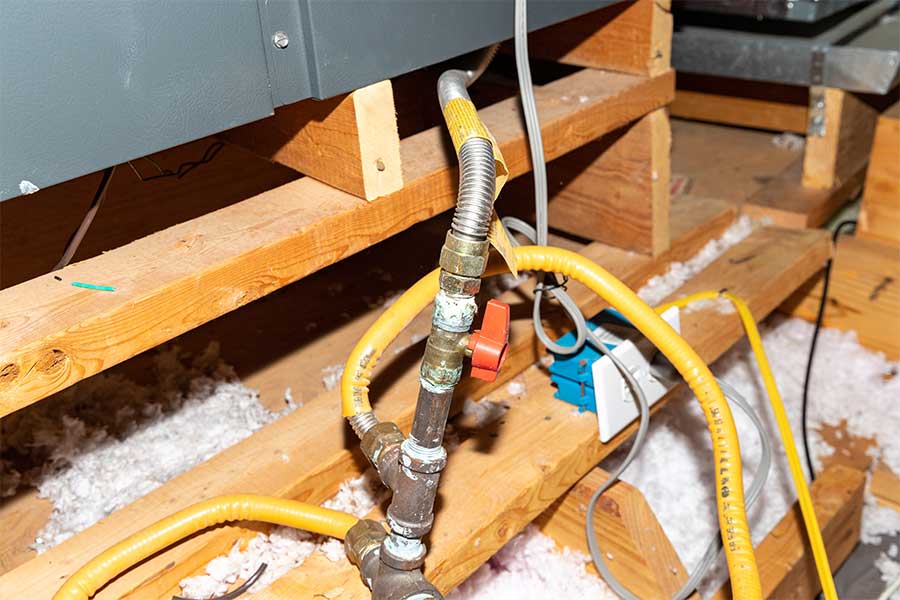
Flexible connector replacement is recommended every 10 to 15 years for the connectors behind ranges, dryers, and other movable gas appliances. Flexible connectors that are kinked, corroded, or have been subjected to physical stress over years of appliance movement are a leading source of residential gas leaks.
Gas shutoff valve maintenance ensures that shutoff valves throughout the home can actually perform their function when needed. Valves that haven’t been operated in years tend to seize. Including shutoff valve operation checks as part of annual plumbing maintenance keeps this basic safety mechanism functional.
Professional installation of new appliances ensures that gas connections are made with approved materials and correct installation methods rather than improvised connections that introduce leak risk from the start.
Carbon monoxide detectors on every level of the home provide an additional layer of protection against incomplete combustion events related to gas appliances, even when a gas leak itself isn’t the primary concern.
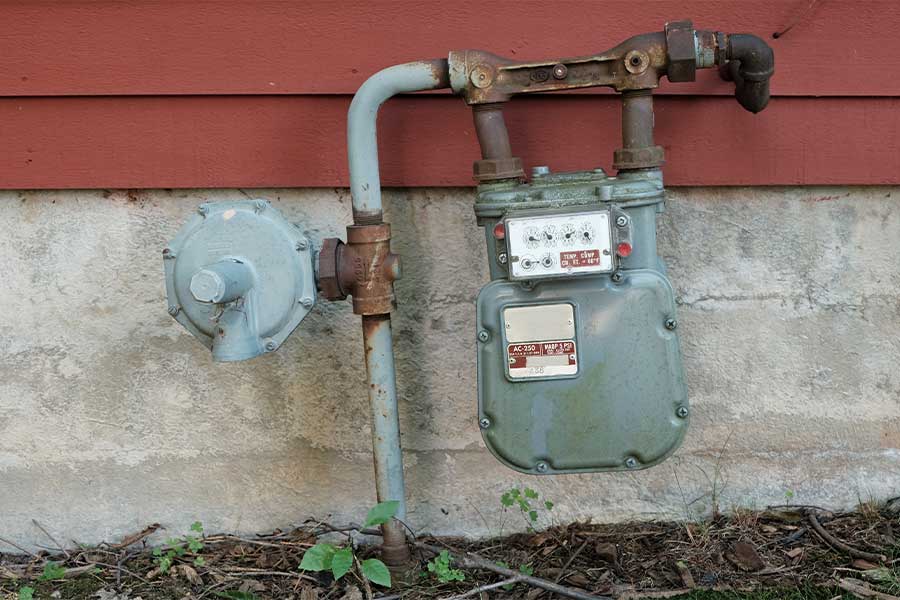
Awareness of buried gas line locations prevents unintentional damage from landscaping, irrigation installation, or any digging project on the property. Calling 811 before any digging project locates all underground utilities including gas lines and prevents the physical damage that causes some of the most sudden and severe gas leak events.
Why Choose Advanced Plumbing, Heating and Air for Gas Leak Repair
Gas leak repair requires a contractor who takes the work as seriously as the hazard demands. Advanced Plumbing, Heating and Air brings licensed technicians, professional detection equipment, code-compliant materials, and a disciplined safety protocol to every gas leak job in Vacaville. We don’t rush gas work and we don’t skip the pressure test. Every job is finished the same way — with verified zero leakage and documented test results before we leave.
We’re a full-service company. If a gas leak repair involves a connected HVAC system, water heater, or plumbing concern, we handle the full scope without requiring a separate contractor.
Why Vacaville homeowners trust us for gas leak repair:
- Licensed technicians with California contractor licensing required for gas line work
- Calibrated electronic leak detection equipment on every call
- Full gas line inspection to identify all leak points — not just the obvious one
- Code-compliant materials and installation methods on every repair
- Pressure testing and final leak verification before gas service is restored
- Carbon monoxide check after repair to confirm appliance combustion safety
- Emergency response capability for gas situations that require immediate attention
- Full-service capabilities covering gas leak repair alongside plumbing and HVAC services
- Clear documentation of repair scope, test results, and materials used
- Professional workmanship and no shortcuts on any gas job
If you suspect a gas leak or need gas line repair after a utility response, contact Advanced Plumbing, Heating and Air. We’ll locate it, fix it, and verify it’s safe before we leave.
We carry commonly needed capacitors on our service vehicles, which means most replacements are completed in a single visit without waiting on a parts order.

Frequently Asked Questions
What does a gas leak smell like?
Natural gas in its pure state is odorless. Gas utilities add mercaptan — a sulfur compound — that produces the distinctive rotten egg or sulfur smell associated with gas leaks. The odor is detectable at concentrations well below dangerous levels, which is why it’s an effective warning mechanism. Some people are less sensitive to the smell than others, which is one reason electronic detection equipment matters — it identifies gas concentrations regardless of whether any particular person in the home can detect the odor.
Can a small gas leak fix itself?
No. A gas leak does not seal itself. A slow seep at a fitting may fluctuate in intensity as temperature changes affect the metal components, but the underlying condition — a deteriorated fitting, a cracked connector, a compromised seal — does not self-correct. A leak that seems to come and go is still a leak that needs professional repair.
How long does gas leak repair take?
Most residential gas leak repairs — connector replacement, fitting repair, valve replacement — are completed in two to four hours including detection, repair, pressure testing, and final leak verification. More involved repairs requiring pipe section replacement or access to underground lines take longer. We provide a realistic time estimate after the initial detection phase so you understand the full scope before repair work begins.
Is one carbon monoxide detector enough for my home?
The California State Fire Marshal recommends carbon monoxide detectors on every level of the home and within a defined distance of every sleeping area. A single detector provides limited protection in a multi-level home where gas appliances may be located on a different floor than the sleeping areas. Ensuring each level has a functioning CO detector provides meaningful additional protection against combustion-related events.
Can a gas leak make people sick?
Yes. Natural gas itself displaces oxygen and at high concentrations causes dizziness, nausea, headaches, and loss of consciousness from oxygen deprivation. At lower concentrations, these symptoms may be subtle and mistaken for other causes. Incomplete combustion from a gas appliance affected by a nearby leak can also produce carbon monoxide, which is a separate and serious health threat. Symptoms including persistent headaches, nausea, lightheadedness, or fatigue that improve when leaving the home should be taken seriously as potential indicators of gas or CO exposure.