
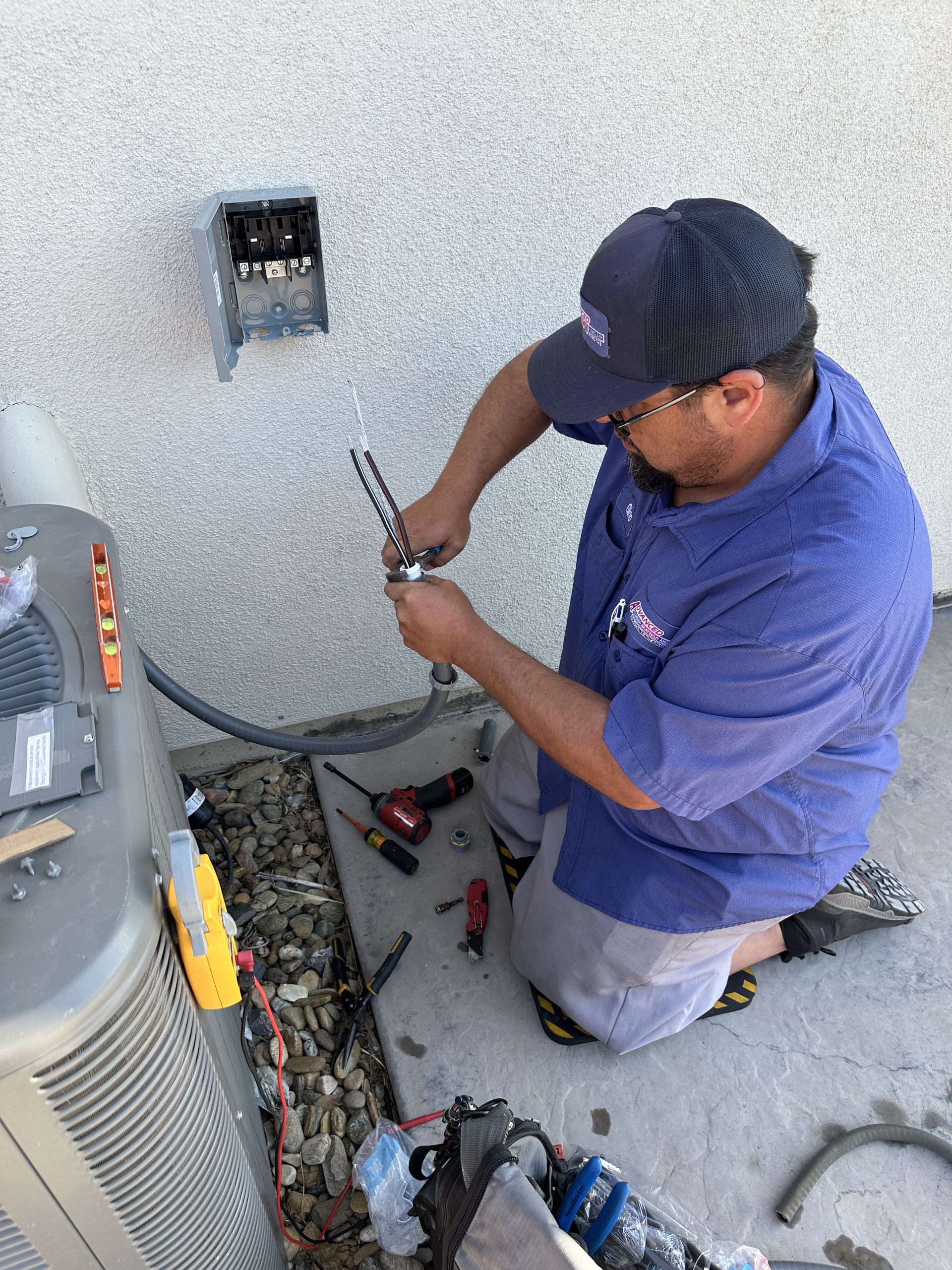
The heat pump compressor is the part that moves refrigerant through your system so heat can be transferred in or out of your home. When it fails, the heat pump stops heating and cooling entirely. Most compressor problems announce themselves first through noise, short cycling, or weak performance.
Key Points
- The heat pump compressor squeezes refrigerant gas, raising its temperature and pressure so heat can move.
- Four problems account for most failures: no start, overheating, unusual noises, and refrigerant leaks.
- Most heat pump compressors last 10-15 years with regular maintenance.
- Replacement runs $1,500 to $2,800 for the part, or $2,000 to $3,500 installed.
- Past 10 years old, replacing the whole system usually beats replacing the compressor.
What Is a Heat Pump Compressor?
A heat pump compressor is the pump that circulates refrigerant through the system to move heat from one place to another. It works like the heart in your body moving blood. Without a working compressor, the heat pump cannot transfer heat at all.
Heat pump compressors run in both heating and cooling modes. In winter they pull heat out of outdoor air, which holds usable heat even when it feels cold, and bring it inside. In summer they reverse and push heat from your home to the outside.
The compressor lives in the outdoor unit of your heat pump system. It is the single most expensive component in the equipment, which is why catching problems early matters.
How Does a Heat Pump Compressor Work?
The heat pump compressor squeezes refrigerant gas, which raises its temperature and pressure. That pressure change is what lets the system move heat instead of generating it.
The Basic Compression Process
When the compressor squeezes refrigerant gas, the gas gets hot. Compressing a gas concentrates its energy into a smaller space, and concentrated energy means higher temperature.
That hot, high-pressure gas then flows through the system. As it moves through the coils, it releases its heat where you need it, which is inside your home during winter.
The Complete Heat Pump Cycle
Here is the refrigerant’s full journey:
- The compressor squeezes the refrigerant gas, heating it up.
- Hot gas moves to the coil, indoor in winter and outdoor in summer.
- The gas cools, turns to liquid, and releases its heat.
- The liquid passes through an expansion valve, which drops its pressure.
- The low-pressure liquid absorbs heat and turns back into a gas.
- The gas returns to the compressor and the cycle repeats.
This loop moves heat rather than creating it, which is exactly why heat pumps use so much less energy than electric resistance heating.
Types of Heat Pump Compressors
Heat pump compressors come in four main types, and the type you have affects both noise and efficiency.
Scroll Compressors
Scroll compressors are the most common type in modern heat pumps. Two spiral-shaped scrolls, one fixed and one orbiting, squeeze refrigerant between them as the moving scroll turns.
Scroll compressors are popular because they:
- Have fewer moving parts than other types
- Run more quietly
- Are very reliable
- Work efficiently in cold weather
Rotary Compressors
Rotary compressors use a rotating mechanism to compress refrigerant, in two variants:
- Single rotary: Uses one rotating cylinder.
- Twin rotary: Uses two cylinders for better balance.
Rotary compressors are common in smaller systems. They are compact, less expensive than some other types, and well suited to moderate climates. They generally do not match scroll compressors in very cold weather.
Reciprocating Compressors
Reciprocating compressors work like small engines with pistons, using a back-and-forth motion to compress refrigerant.
These compressors are:
- Less common in newer heat pumps
- Usually less expensive
- Not as efficient as scroll compressors
- Often noisier than other types
You will still find them in older systems and budget models.
Variable-Speed Compressors
Variable-speed compressors, also called inverter compressors, are the newest technology. Instead of cycling fully on and off, they run at whatever speed the current heating or cooling load requires.
The benefits include:
- Much higher efficiency
- Better temperature control
- Quieter operation
- Less wear from starting and stopping
- Better performance in extreme temperatures
They cost more upfront. Many homeowners find the energy savings and comfort worth it.
Common Heat Pump Compressor Problems
Even good heat pump compressors develop problems. Knowing the four common ones helps you catch them early.
Compressor Won’t Start
A compressor that will not start usually comes down to:
- Electrical problems such as bad wiring or a failed capacitor
- Low voltage reaching the unit
- Failed start components
- A seized compressor from internal damage
- Bad thermostat signals
You might notice the outdoor unit sitting silent, or a hum with nothing else happening. A hum with no start often points to a failed start capacitor, which is one of the less expensive repairs on this list.
Compressor Overheating
Compressors run hot and can exceed their limits. Common causes:
- Dirty coils blocking airflow
- Low refrigerant levels
- Too much refrigerant, meaning an overcharge
- A failed cooling fan
- Electrical problems
An overheating compressor shuts off repeatedly as its safety switch trips. That pattern is called short cycling, and it damages the system if it continues. Repeated short cycling usually warrants heat pump repair before the compressor is stressed further.
Unusual Noises
A healthy compressor runs with a steady hum. Other sounds mean specific things:
- Rattling: Loose hardware or mounting.
- Grinding: Worn bearings.
- Screeching: Motor problems.
- Banging: Broken internal parts.
- Bubbling: Usually signals a refrigerant leak.
Any sudden change in the sound your compressor makes deserves attention before it becomes a bigger repair.
Refrigerant Leaks
Refrigerant leaks damage the compressor because the system runs longer trying to compensate. Signs include:
- Reduced heating or cooling performance
- Ice buildup on the refrigerant lines
- Hissing sounds near the compressor or lines
- The system running longer than usual
- Higher energy bills
Refrigerant leaks must be repaired by a professional. The leak gets sealed first, then the system is recharged to the correct amount. Topping off refrigerant without finding the leak simply wastes it.
What to Do Before the Technician Arrives
A few steps between noticing the problem and the appointment can keep a repair from turning into a replacement.
- Shut it down: If you hear grinding or banging, or see ice on the lines, turn the system off at the thermostat. Running a failing compressor is what converts a repair into a replacement.
- Clear the outdoor unit: Pull leaves, debris, and overgrowth back from all sides. Restricted airflow is one of the most common causes of overheating, and it is free to fix.
- Change the filter: A clogged filter strains the compressor. If yours is dirty, replace it before the visit.
- Check the breaker: A tripped breaker sometimes explains a dead outdoor unit. Reset it once. If it trips again, leave it off and tell the technician, because a repeat trip usually signals an electrical fault.
- Write down what you noticed: The sound, when it started, and whether it happens on startup or during the run. That detail shortens diagnosis considerably.
Do not add refrigerant yourself and do not open the compressor housing. Both require certification, and both can make the underlying problem worse.
Maintaining Your Heat Pump Compressor
Good maintenance is what gets a compressor to the far end of its expected lifespan.
Regular Professional Maintenance
A professional check once or twice a year is the single best thing you can do. During a visit, a technician will:
- Check refrigerant levels
- Test electrical connections
- Clean coils and components
- Inspect for leaks
- Measure operating pressures
- Confirm proper airflow
Scheduled heat pump maintenance catches small faults while they are still small.
DIY Maintenance Tasks
Keep the outdoor unit clean: Clear leaves, dirt, and debris away. Nothing should block airflow.
Change air filters regularly: Dirty filters make the system work harder. Change them every 1-3 months.
Keep vents open and unblocked: Closed or blocked vents create pressure problems that strain the compressor.
Give the unit space: Plants, structures, and debris need to stay back. The unit needs at least 2 feet of clear space on all sides.
Watch for ice buildup: Ice on the outdoor unit in winter, beyond a light frost, means something is wrong. Call a professional.
Protecting Your Compressor
Install a surge protector: Power surges damage the compressor’s electrical components. A whole-system surge protector prevents that.
Use a compressor blanket in cold climates: In very cold areas, a blanket helps the system run more efficiently through winter.
Keep the thermostat at reasonable settings: Extreme settings make the compressor work harder. In winter, set no higher than 68-70°F. In summer, aim for 74-78°F.
Consider a soft start kit: These reduce strain on the compressor at startup, which can extend its life.
When to Replace Your Heat Pump Compressor
Sometimes repairing a compressor is the wrong call. Here is how to tell.
Age Considerations
Most heat pump compressors last 10-15 years with good maintenance. If yours is:
- Less than 5 years old: Repair is usually best.
- 5-10 years old: Weigh repair cost against replacement.
- Over 10 years old: Replacement often makes more sense.
Newer compressors are considerably more efficient, so an upgrade can pay back part of its cost through lower bills.
Cost Analysis: Repair vs. Replace
Compressor replacement is expensive, often $1,500 to $2,800 for the part alone plus labor. Many professionals use a simple rule: if the repair costs more than 50% of a new system and your system is over 7 years old, replacement is usually the better value.
Also weigh:
- Energy efficiency of a new system
- Remaining lifespan of other components
- Warranty coverage
- Availability of parts for older systems
Signs It’s Time for a New System
These point toward replacing the whole system rather than just the compressor:
- Frequent breakdowns in recent years
- Rising energy bills despite maintenance
- An R-22 refrigerant system, since that refrigerant is being phased out
- Poor performance even after repairs
- Multiple components failing, not just the compressor
A new system costs more upfront and delivers better efficiency, better reliability, and fresh warranty coverage. When that is the direction, heat pump installation and replacement is the conversation to have.
Frequently Asked Questions About Heat Pump Compressors
How long do heat pump compressors typically last?
With proper maintenance, most heat pump compressors last 10-15 years. High-quality models can reach 20 years with excellent care. Lifespan depends on equipment quality, how often the system runs, local climate, maintenance frequency, and power quality in your area.
Can I replace just the compressor, or do I need a whole new heat pump?
You can replace just the compressor, but it is not always the best choice. On a system 10 years or older, replacing everything usually makes more financial sense and delivers better efficiency with a full warranty. On newer systems, the compressor may still be under warranty, so check the details first.
Why is my heat pump compressor making noise?
Some noise is normal, but new sounds are not. Rattling means loose hardware or debris. Grinding means worn bearings or motor trouble. Hissing means a refrigerant leak. Clicking is electrical components cycling. Banging means broken internal parts. Any sudden change deserves professional attention.
How can I tell if my heat pump compressor is bad?
Warning signs include warm air in cooling mode, a circuit breaker that trips repeatedly, a compressor that struggles to start, unusual outdoor unit noises, short cycling, weak airflow, and higher electric bills. Any of these warrants a professional diagnosis.
Is a heat pump compressor covered under warranty?
Most heat pumps carry two warranty periods. Parts warranties usually run 5-10 years and cover the compressor. Labor warranties typically run 1-2 years. Some manufacturers offer extended compressor warranties of 10+ years. Register your heat pump promptly after installation to activate full coverage.
How much does it cost to replace a heat pump compressor?
Replacing a heat pump compressor typically costs between $1,500 and $2,800 for the part alone. With labor, the total usually runs $2,000 to $3,500. Brand, compressor type and size, local labor rates, unit accessibility, and any additional repairs all move that number.
Keep Your Heat Pump Compressor Running
The heat pump compressor does the hardest work in your heating and cooling system, and it gives you warning before it fails. Noise changes, short cycling, and weak performance are all early signals.
Book professional service twice a year, keep the outdoor unit clear, change filters on schedule, and act on unusual sounds instead of waiting them out. That routine is what separates a compressor that reaches 15 years from one that quits at eight.
Hearing something new from your outdoor unit, or watching it cycle on and off? Emergency HVAC repair is available when a system quits outright, and for everything else, schedule your appointment today. We will diagnose the compressor, tell you whether repair or replacement is the better value, and give you the numbers before any work starts.